
Table of Contents
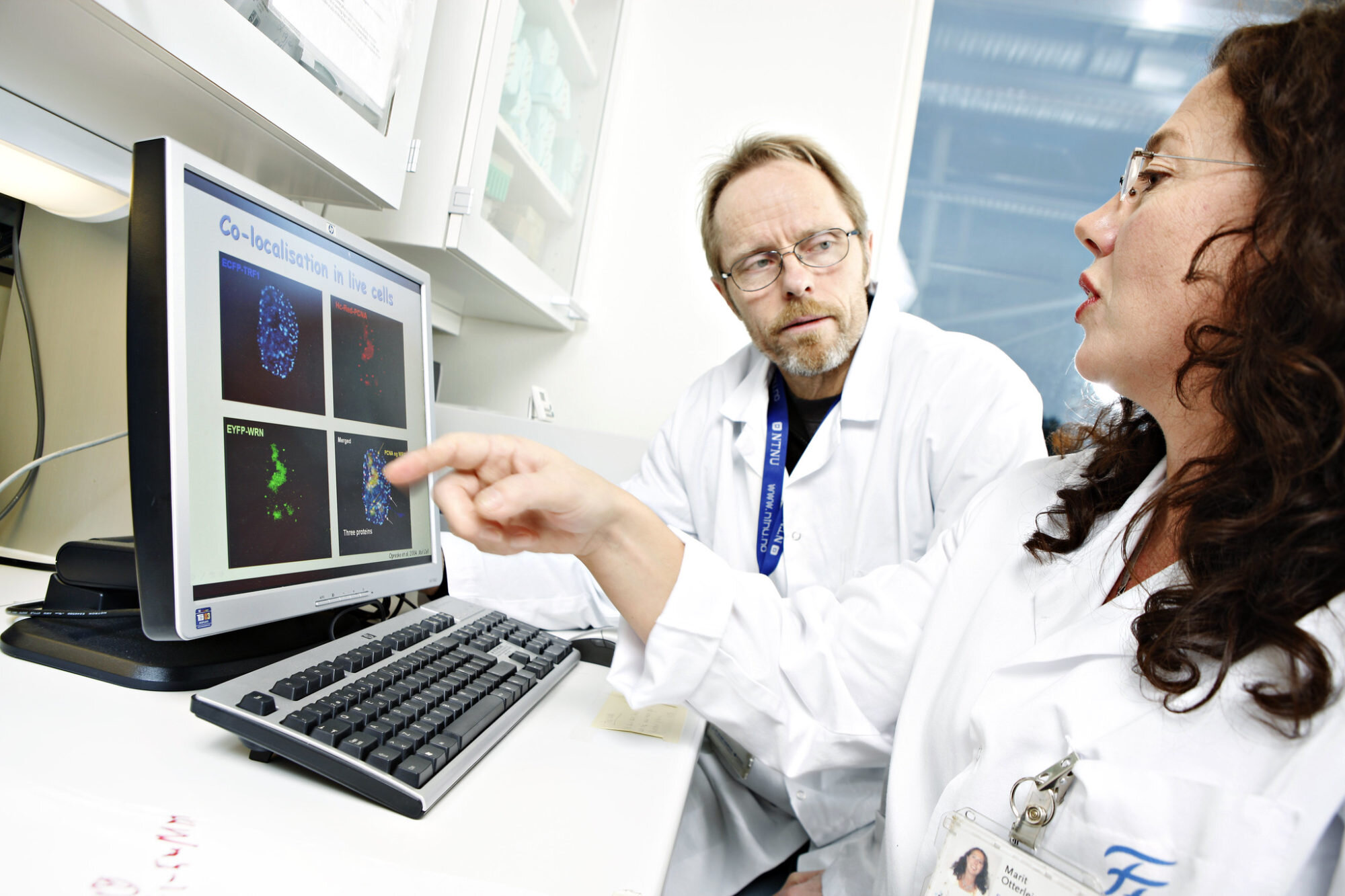
A promising most cancers drug that targets only cancer cells has been produced by scientists from the Norwegian College of Science and Technological innovation (NTNU) and a college spin-off company, APIM Therapeutics.
NTNU has been liable for the simple exploration. APIM Therapeutics has utilized the primary research to acquire the medicine.
It has taken 18 decades and a lot more than EUR 20 million.
The medicine has now been analyzed on 20 cancer individuals who had been terminally unwell. They had attempted all out there remedies, and as a very last resort they opted to attempt a new alternative that was in the experimental stage.
Cancer stopped escalating
The trials took spot in Australia, exactly where there are clinics that specialize in screening new medications.
The final results are incredibly promising and have been posted in the journal Oncogene.
Seventy percent of the clients who analyzed the drugs were secure soon after six weeks. Twelve continued the medicine and were secure for 18 months. One particular lady took the medicine for 17 months, and was stable for over two yrs.
In other terms, the cancer stopped developing.
The purpose of the tests in Australia was not primarily to examine whether or not the drugs labored, but instead to ascertain no matter whether it was harmful to individuals.
It absolutely was not toxic.
The medicine has earlier been revealed to equally hold cancer at bay and defeat it in laboratory and animal experiments.
Marit Otterlei is powering all the investigation. She is a professor of molecular medication at NTNU.
Sufferers prevent hair loss
With most cancers, problems has transpired in the cells’ genetic material, so that the cells divide uncontrollably. At some point, broken cells accumulate and sort a cancerous tumor.
“Cancer cells are additional pressured than other cells. Having said that, they really don’t die but carry on to increase even when they are damaged. Conventional cancer therapy with chemotherapy places additional strain on the most cancers cells so that the cells at some point do die. Chemotherapy influences all cells, together with the regular ones, these types of as in the hair follicles, and thus has an effect on the complete physique with several aspect results like hair reduction,” states Otterlei.
This is where her invention stands out.
The new most cancers medication that Otterlei has produced is referred to as ATX-101. It only functions on pressured most cancers cells, and leaves the other healthy cells in the system on your own.
Just one of the dissimilarities with this medication is so that most cancers sufferers keep away from shedding their hair.
“ATX-101 can be used as the only therapy. It can stabilize the cancer as revealed in the recently printed research, but the medicine can also support chemotherapy work even superior so that you you should not have to have so significantly of it,” suggests Otterlei.
From discovery to medication
Simply put, the new most cancers drug destroys cancer cells’ capacity to tackle anxiety so that they die.
In somewhat a lot more complex terms, the new cancer drug is a peptide that has a distinctive binding sequence, APIM, which is uncovered in lots of distinct proteins that bind to a coordinator molecule known as PCNA.
If you’re however hanging in there, the additional clarification is that far more than 500 proteins can probably bind to this coordinator molecule.
“50 % of the proteins have the binding sequences that we identified, and yielded the identify APIM for the sequence. We observed that the APIM sequence is utilised to bind to PCNA generally in the course of pressure, and it can be critical for regulating worry in the cell. By blocking these bonds, the strain regulation will be ruined,” claims Otterlei.
All of this sounds quite effortless and easy in retrospect.
But the route from the organic discovery in the lab to making use of this expertise to deal with individuals has taken 18 several years.
The to start with impediment was to produce a medication that labored in the similar way as the biological discovery.
No genuine pharmaceutical field in Norway
Otterlei and the staff ended up capable to generate the drugs after several years of repeated demo and error, which then enabled them to obtain a patent.
The staff also worked to recognize how the coordinator molecule PCNA regulated several pressure functions. Otterlei and her colleagues at NTNU a short while ago posted an write-up that showed that PCNA has a freshly uncovered position as a regulator of the metabolic process in our cells (ref oncogene art, Røst et al).
The scientists think this function is important for the stabilizing outcome that the drugs has on most cancers people.
All the standard analysis is being carried out at NTNU, but given that a college can’t be a industrial actor and produce medication, Otterlei experienced to found a corporation and start off a wholly various pursuit than educational publishing.
That pursuit was the hunt for cash and investors.
“We have no pharmaceutical field for new medicines in Norway. What we’re doing the job on is also extensive-term for most investors right here. Scientific trials expense any where from 10 million euros and upwards, and it’s really tricky to receive adequate funding. The major pharmaceutical organizations want to have results from a Period 2 medical demo ahead of they may well be interested,” states Otterlei.
It has also been problematic to get aid for the primary exploration bordering the biological discovery itself, in terrific section mainly because Otterlei has attempted to commercialize and build a drugs.
“I have searched and searched. Devoid of NTNU’s internal guidance, very little would have come of all this,” suggests Otterlei.
Success of the drugs is now remaining checked
The development has now entered Phase 2. The testing in Australia (Period 1) desired to exhibit that the medicine was not harmful. Section 2 desires to build the usefulness of the medicine, which is now ongoing.
The medication will now be examined in the U.S. on people with sarcoma, a kind of connective tissue cancer. In Australia, the medication will be examined on ovarian most cancers individuals. Equally clinical trials are becoming conducted in mixture with chemotherapy.
On the other hand, even if the outcomes from the trials are very good, the way forward is still uncertain.
“A lot of medicines could work but will not make it by the progress procedure. The pharmaceutical sector will not just take on any projects they can not financial gain from. What we acquire has to work a little bit greater than present-day treatment plans, and if possible be much less expensive to make and have fewer aspect results. Only then can an high priced development run spend off. It’s been a lengthy run, and you will find even now a extended way to go,” states Otterlei.
The paper is revealed in the journal Oncogene.
Extra data:
Charlotte Rose Lemech et al, ATX-101, a cell-penetrating protein concentrating on PCNA, can be securely administered as intravenous infusion in clients and displays scientific activity in a Stage 1 study, Oncogene (2022). DOI: 10.1038/s41388-022-02582-6
Quotation:
Stage 1 research: New medication extends terminally-unwell cancer patients’ lives (2023, March 22)
retrieved 4 April 2023
from https://medicalxpress.com/information/2023-03-stage-medicine-terminally-ill-cancer-patients.html
This document is issue to copyright. Apart from any reasonable working for the function of personal study or analysis, no
part might be reproduced without having the prepared permission. The information is delivered for facts uses only.

More Stories
Tigrinho: Juegos de casino y características de bonificación
Betalen bij nika casino: stortingen, opnames en accountcontrole: Verwerkingstijden per methode
Casino en línea — Condiciones de las promociones y requisitos de cuenta: un análisis práctico de los principios generales